Meeting Dr. [Prof] R. K. Tuli at his New Friends Colony Clinic “SOHAM” was an uplifting experience that filled the Double Helical Team with positive vibes and immensely feel-good factor. During our hours-long conversation, Dr. Tuli elaborated on the complementary benefits of Holistic MediCare which by harmonizing our inherent natural life-force helps to impart health, eliminate sickness and restore total wellness. Thereby, it minimises dependence on external medication and surgical interventions
“President Ram Nath Kovind believes that the use of both modern and
traditional system of medicine is gaining acceptance abroad”
The whole is greater than its part”, goes the golden saying underlying the significance of seeing life in its totality, as the sum total of all the choices or decisions that we make; the positive and negative attributes, energies and thoughts that we possess. This innate wisdom lies at the core of the clinical concept of Holistic Medicine spearheaded by Dr. [Prof] Ravinder K. Tuli, the founder of Society for Holistic Advancement of Medicine “SOHAM”.
The advent of antibiotics and vaccinations in the middle of the last century led to dramatic conquest over prevalent infectious diseases, followed by emergence of analgesics for quick relief from pain. It established the supremacy of modern medicine over the traditional systems of health as a quick and effective cure.
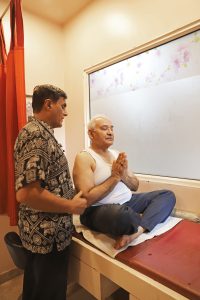
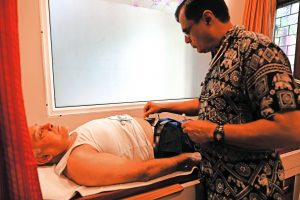
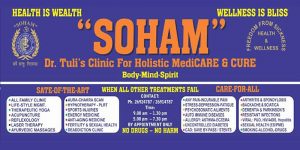
“SOHAM”, the brain child of Dr.Tuli is dedicated to optimum integration of best of modern medicine with drug-free modalities of all the officially recognised traditional or the alternate systems of health. Holistic Medicine, as practiced by this doctor with a difference, blends Western, Indian and Chinese philosophies for a synergy of all the systems and specialities of medicine to bring out their best to add ‘life to the years’ and impart ‘quality-to-life’ of each individual.
According to Dr. Tuli, the advent of antibiotics and vaccinations in the middle of the last century led to dramatic conquest over prevalent infectious diseases, followed by emergence of analgesics for quick relief from pain. It established supremacy of modern medicine over the traditional systems of health, which had taken care of the humanity over a millennium, as a quick and effective cure. This followed by developments in diagnostics, emergency care, rapid advances in surgery followed by introduction of robotics and telemedicine, etc., helped tremendous development in tertiary health care with world class institutions coming up in our country.
But, the germs kept on mutating in recent decades to challenge the currently available antibiotics, while the R & D has not been able to cope up with the emerging viruses. Also, the pattern of sickness has undergone drastic changes in the form of lifestyle disorders with an increasing hiatus in the management of psychosomatic disorders, immune disturbances, metabolic, hormonal, degenerative, and malignant diseases, etc. Our country has acquired the status of capital of several diseases in the world. The morbidity due to common diseases has gone up nearly three times in last four decades.
“Recent loss of eminent political leaders Smt. Sushma Swaraj and Mr. Arun Jaitley in their sixties despite getting the best of medical care that anyone could avail in the world is an example of ‘chinks-in-the-armour’ of high-tech current medical care. Bharat Ratna Atal Bihari Vajpayee ji had undergone replacement of his knee joints, but despite a successful surgery he was never able to walk properly as he remained bed-ridden in following years, and had to suffer with progressive morbidity for over a decade till his passing away.
The PMJAY or the Ayushman Bharat scheme has been initiated by our popular Prime Minister to prevent people from falling into the poverty ditch due to expense on healthcare. But, the rupees 5-lakh annual undertaking by the government to each poor family for tertiary medical care shall only provide temporary succor, as it can never improve health of the people.
This highlights limitations of best of the currently available medical support. It is not possible to cure most of the common diseases, or bring out the best in a human being by modern medicine alone. The fact is that even after a successful surgery the patient has to heal his own wounds to be able to return home; and antibiotics will work only if the patient’s own immune system is robust enough. The drugs and equipment used for life-support in intensive care help only till our own life-force or the ‘prana’ responds; they cannot provide us with the life-force needed for healing, recover from sickness or restore health,” Dr Tuli observes.
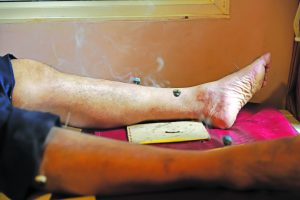
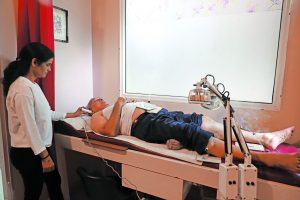
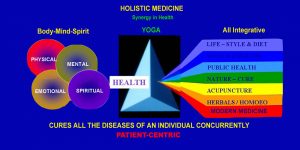
At “SOHAM”, an individual is treated as a whole, i.e., as the ‘microcosm’ of the universal ‘macrocosm’ to harmonise the human individual with his universal whole to restore the ‘milieu interior’ of the person that triggers inherent natural healing, i.e., replacing the old with the new. This phenomenon to boost the host factors is best facilitated by an optimum synergy of all the drug-free modalities of various officially recognised traditional or the alternate systems of health. It, further, complements highest in medical care to overcome ailments beyond the realm of the best of any one system of medicine rendered individually. This approach brings together the strengths of all the systems and balances the weaknesses inherent in different systems of healthcare for the best benefit of each patient. This wholesome approach to health is termed Holistic Medicine.
Modern medicine is inevitable in emergency situations, and it’s essential for life-saving. It offers good results in symptom control in quick time. But, its long term use in management of chronic diseases builds up a pile of side-effects and cumulative toxicity building up to prolonged morbidity and eventual mortality.
Albert Einstein had stated, “I fear the day when technology will surpass human endeavours.” Sadly, modern-day practice of medicine has reduced human being to a machine as there is a specialist for every part of the body. But, according to Charaka Samhita human being is not merely a body or its parts, but it’s an inseparable complex of the Body, the Mind, the Senses, and a Soul at its core. The human soul or consciousness with its inbuilt infinite natural intelligence is the factor of life; while the mind regulates the body without our knowing as it co-ordinates the beatings of heart, functions of the lungs, kidneys, liver and all the different organ systems for our survival.
In allopathic practice of medicine the practitioners all the time seek external interventions for every need of the patient. The clinical diagnosis has been replaced by excessive reliance on mechanical diagnostics. The practice of bed-side medicine has become so rare that the use of stethoscope has become very limited, and value of the human touch almost defunct these days” rues Dr Tuli.
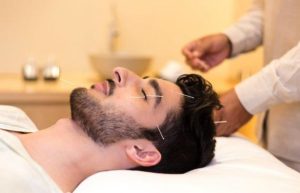
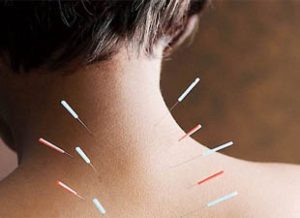
Says Dr. Tuli, “Modern medicine is inevitable in emergency situations, and it’s essential for life-saving. It offers good results in symptom control in quick time. But, its long term use in management of chronic diseases builds up a pile of side-effects and cumulative toxicity contributing to progressive morbidity in each patient. This practice defeats the basic tenets of Hippocrates, in whose name we take the oath as we become doctors. He had desired “Primum Non-Nocere”, that is, First Do No Harm. There is no medical support where we can promise this. We do not seriously follow another of Hippocrates’ dictum, “Let Thy Food Be Thy Medicine”, whereby he meant that let the food and lifestyle take care of people’s health. Most of the modern ailments like anxiety, depression, insomnia, diabetes, hypertension, heart disease, immune disturbances, psychosomatic disorders, cancer, and even trauma are attributable to wrong lifestyle. All doctors should also be familiar with the Hippocrates’ observation, “Our life-force is the greatest factor in our getting well.” Therefore, we must take care of our ‘life-force’. It involves disciplined life-style including regular hours of adequate sleep, practice of yoga and exercise to maintain the harmony needed to stay healthy. The system of acupuncture, traditionally known to restore any disturbance in the ‘life-force’, has established scientific credibility with its endorsement by W.H.O. for the cure of a large number of diseases.”
The wellness of human being is dependent on its harmony with the universe as each living being is an extension of the natural cosmic energy with its infinite inbuilt natural intelligence. We must develop this harmony with the nature to enjoy health.
A 1964 batch alumnus of the prestigious Armed Forces Medical College, Pune, Dr. R. K. Tuli was awarded the President’s Commission into Army Medical Corps and seconded to Indian Air Force. He was adjudged the Best-All-Round Medical Officer at the Army Medical Corps Centre and School. He received post-graduate training in Aviation Medicine at Institute of Aerospace Medicine; Sports Medicine at National Institute of Sports; and Internal Medicine at Army Hospital (R&R). He had a distinguished career in IAF before seeking premature retirement in the year 1981.
“I served in the Indian Air Force where it was my responsibility to keep the pilots fit for flying the high performance aircraft. As the engineer ensures proper working of the machine, the pilot manning the machine is looked after by an aviation medicine doctor specially trained in this job. The pilot’s peak endurance is essential to ensure that he flies the sophisticated machine to its optimum to destroy the enemy and return home safe. Now, if he depends on any medicine, he is not allowed to fly as the side-effects of medicine are unpredictable. Later, as I specialised in Sports Medicine to be Medical Adviser to Air Force Sports Control Board and Indian Hockey Federation, my job was to help sports persons to maintain their peak, bring glory to the nation, and win Arjuna Awards, etc. for themselves. My job was to keep the sports persons free of any medicines to win their medals; else they’d be penalized for DOPE. Further, my thesis “A five year retrospective study of ST-T wave changes in the ECG of asymptomatic aircrew” for M.D. (Medicine) during 1977-79 at Army Hospital R&R confirmed that Coronary Artery Disease was reversible by effecting lifestyle changes. All this developed my faith in superiority of non-pharmaceutical support over medications to bring out the best in a human being,” recounts the doctor.
Ultimately, even after a successful surgery, the patient has to heal his own wounds to be able to return home; and antibiotics work only if the patient’s own immune system is robust enough. The drugs and equipment used for life-support in intensive care help only for a limited period till our own life-force or the ‘prana’ responds.
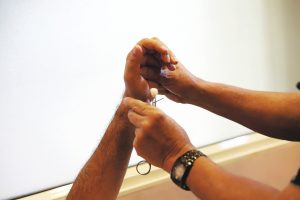
His passion for drug-free management of health led him to visit various leading institutions in China to acquire a high level of proficiency in the system of acupuncture. He explains that ‘bhedan-kriya’ has been an integral part of traditional ayurveda, but the ancient Chinese royalty patronized it to its modern stature. His faith in acupuncture developed when he found it repeatedly to be more efficient than even parenteral drugs in tackling many medical emergencies. His personal experience was boosted with the publication of World Health Organisation (W.H.O.) document in year 1982 endorsing the use of acupuncture in most of the chronic diseases. He mastered this technique to adopt it into his medical practice, later blending the application of other drug-free modalities of yoga, panchakarma, and psycho-hypnotherapy, etc., to offer harmless complete solution to each patient suffering from varied and multiple diseases. His clinic “SOHAM” pronounces “Sarve Santu Niramaya” to be its motto with promise to “Eliminate All Sickness and Restore Positive Health & Total Wellness encompassing ‘Body-Mind-Spirit’, as far as possible, without the use of any medical interventions.
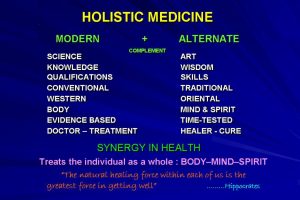
Significantly, Dr.Tuli was invited to establish the world’s first-ever Department of Holistic Medicine at the state-of-the-art multispecialty tertiary care Indraprastha Apollo Hospitals, New Delhi in year 1996 as its Chairman Dr. Prathap C. Reddy envisioned it to be “the medicine of 21st century”. The need for this all-inclusive approach is evoking interest globally. It offers the best in healthcare by blending the evidence based ‘science’ of modern Western medicine with the time honoured ‘art’ of Indian as well as Chinese wisdom. It’s a board certified speciality in the U.S. and being recognised in more and more countries.
The W.H.O. defines health as not merely an absence of disease or infirmity, but a state of positive physical, mental and social well-being. In year 1986, the World Health Assembly recommended ‘spiritual’ aspect being included as the fourth dimension of health. Unfortunately, the same has not been included in the definition of health, till today, due to lack of its understanding by the modern scientific temperament. We must appreciate, “As a human being our wellness is dependent on our harmony with the universe, as each living being is an extension of the cosmic energy with its infinite natural intelligence. You can’t remain healthy if you don’t keep a balance with the nature,” quips Dr Tuli.
“Modern medicine merely treats the symptoms – like the tip of an iceberg – and hardly ever cares to get to the root cause of the disease. If you have pain, high blood pressure or raised blood sugar, you pop up a pill and at best the symptom is down for a few hours. But, the disease persists for ever and keeps on growing in the body involving even other organs and progressively growing morbidity. Conversely, clinical application of holistic medicine is shown to break the iceberg underneath, i.e., reverse the process of disease, initiate inherent natural healing, eliminate the disease from its very root, and promote positive health as well as sustainable wellness. At the primary level its application helps to promote health and prevent sickness; whereas at secondary and tertiary levels it efficiently complements all the systems and specialities of medicine to improve the final outcome of every sickness, cure a vast number of conventionally incurable diseases, and add to quality of life of each individual,” Dr Tuli adds.
The failure of the WHO-UNICEF project “Health For All By 2000 A.D.” taught a lesson that health cannot be achieved by healthcare delivery system relying exclusively on the modern or allopathic system of medicine.
Dr Tuli highlights that since independence, there has been a steady improvement in vital health indices and simultaneous development of a robust world class secondary and tertiary healthcare system in our country. But, we have not paid requisite attention to primary, preventive and promotive care. As a result, there is a galloping increase in the incidence of many diseases, especially those attributable to lifestyle disorders.
“India got freedom in 1947 and China that was a much poorer and backward nation than ours at that time gained independence in 1949. Immediately after taking over, Chairman Mao-Tse-Tung initiated the programme of ‘barefoot doctors’ whereby rural workers like teachers, watchmen, and postmen, etc. were trained into short-term courses imparting knowledge about the methodology of ethnic Chinese medicine including acupuncture. This initiative at primary care led to a sound state of healthcare in China leading it to become a world power much ahead of us. We too need to promote primary health care in our country incorporating traditional knowledge and practices of our people.”
Due to inadequate facilities and overcrowding at public institutions, and unaffordability of medical care in private hospitals, a vast majority of people recede further into the widening pit of poverty. The WHO statistics reveal that around 100 million people all over the world fall below poverty line every year because of out-of-pocket medical expenses; out of which 40 million belong to our country. The PMJAY or the Ayushman Bharat scheme has been initiated by the Prime Minister to prevent people from falling into this poverty ditch due to expense on healthcare. But, the rupees 5-lakh annual undertaking by the government to each poor family for tertiary care shall only provide temporary succor, as it cannot restore true health of the people. The well known fact that primary drug-free care which is the key to achieving health, from which emerge all the assets of life, should have been given higher priority” opines Dr Tuli.
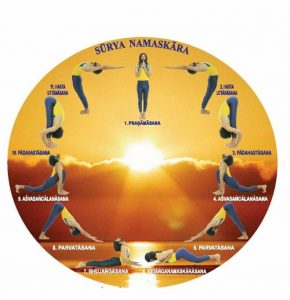
Holistic approach to health enables healthcare to be far more easily accessible, acceptable, harmless, efficient and highly cost effective. It’s, also, found to be highly predictable, reproducible and sustainable – thus qualifying it to be scientific too. The failure of the WHO-UNICEF project “Health For All By 2000 A.D.” taught a lesson that health cannot be achieved by healthcare delivery system relying exclusively on the modern or allopathic system of medicine. Dr Tuli cites the example of Sri Aurobindo who stated, “Only after renouncing the aid of medicines, I found a curative force within myself”. The practice of holistic medicine channelizes this life-force to keep a person in good health. It derives its inspiration from our ancient texts like Maharishi Patanjali’s Ashtanga Yoga that ordains human being to subscribe to a lifestyle comprising inherent practice of yama, niyama, asanas, pranayam, pratihara, dhyana, dharana, and samadhi (abstaining from evil, discipline, physical exercise, awareness of breath, control of senses, focus to the purpose, and visualisation leading to a state of bliss).
Every doctor, irrespective of system or speciality, should endeavour to enhance skills beyond any boundaries to be able to provide the best care to each of the patients.
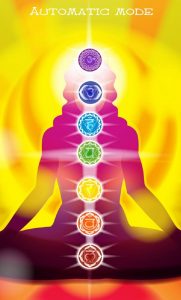
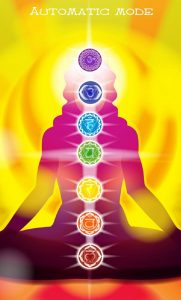
Dr. Tuli draws our attention to a Vedic concept that our posture is as critical as our food. “There are seven major chakras or subtle energy transforming vortices arranged along the spine. When our posture is upright, the chakras remain aligned and the life-force flows harmoniously necessary for health and happiness. But, when our posture is wrong, the chakras get out of harmony with each other and health problems begin.” Life is all the time trying to replicate itself, as evident by ever-going replacement of old body cells with the fresh and healthy. We have to consciously support this process all the time and avail natural ways of treatment by qualified and experienced doctors who guide to lead a healthy life, and in sickness help to natural elimination of diseases for positive health and total wellness.
Significance of holistic medicine
Holistic medicine is an overall philosophy that considers the whole body of a person, physically, psychologically, socially and spiritually, in order to prevent diseases and to find optimal health. People can achieve optimal health by gaining proper balance in life.
The ideology behind holistic health is that the human body is made up of interdependent parts. If one part of the body is not working correctly, the whole body will not work correctly. Overall, this means if people have imbalances in their lives whether it is physical, emotional or spiritual, the imbalance can harm the overall health.
Holistic doctors use various forms of health care such as conventional medicine with a focus on promoting natural healing. Holistic medicine treats symptoms as well as looks for underlying causes of the symptoms. If a person has consistent headaches and migraines, a holistic physician will not just prescribe sleeping medication. They will look at other factors such as diet, sleep habits, stress and other potential root causes in order to improve their patient’s quality of life. Although holistic doctors will prescribe medicine when deemed necessary, with a high focus on lifestyle modifications, patients that work with doctors who follow this philosophy will see better long-term results and in the case of consistent headaches or migraines, see lower incidences in their future.
Holistic medicine is beneficial for long-term health because it will not only help an existing problem but will help prevent other problems down the line. Treatments in holistic medicine are designed to improve the body overall with a focus on health. Treatments include enhancing the mind’s capacity to affect bodily functions and symptoms, through uses of substances such as antioxidant rich foods and vitamins to enhance healing and prevent future illnesses. Instead of healing one factor of the body, holistic medicine heals the body as a whole to improve an illness and life as a whole.
Dr. Tuli sums up his meaningful observations thus, “It is accepted universally that health can’t be achieved by services based exclusively on allopathic medicine. Even though it can be lifesaving in acute emergency and quick in symptom relief, it makes the people poorer and damages their health in the long run. The priority of medical services should be on promotion of health, prevention of sickness, early detection of disease and its efficient harmless cure.” He adds, “It’s best achieved by optimum integration of modern medicine with complementary drug-free modalities of all the officially recognised AYUSH systems of yoga & naturopathy, ayurvedic principles & panchakarma, including the system of acupuncture and psycho-hypnotherapy. Every doctor, irrespective of their system or speciality, should endeavour to enhance skills beyond any boundaries to be able to provide the best care to each of the patients.”
It is accepted universally that health can’t be achieved by healthcare services based exclusively on allopathic medicine. Even though it can be lifesaving in acute emergency and quick in symptom relief, it makes the people poorer and damages their health in the long run. The priority of medical services should be on promotion of health, prevention of sickness, early detection of disease and its efficient cure.
“The major part of the country’s expenditure on health is utilised for tertiary health care. It’s even at the expense of accessible primary, preventive & promotive care which has been put on the back-burner, while vigorous action has been initiated to open 15 more AIIMS and a medical college in every district. We should realise that even in the countries that spend a whopping amount on healthcare, their citizens do not enjoy positive health. The USA spends 16 per cent of its GDP on health, but no one in that country is satisfied with the available services. So, we’d better not follow that pattern and instead tap into our own ancient heritage to indigenise and embrace all inclusive health care system termed Holistic Medicare which enables accessible, acceptable, affordable, harmless, cost-beneficial, predictable, efficient, reproducible and sustainable health with least medical and surgical inventions” he emphasises. It is also the sure way to restore old glory of the medical profession.
V. V. I. P. BENEFICIARIES OF Dr. TULI’s HOLISTIC MEDICARE
Shri FAKHRUDDIN ALI AHMED (s/o & d-i-l/o), Former President of India
Shri. I. K. GUJRAL (w/o), Former Prime Minister of India.
Shri Chandrashekhar, Former Prime Minister of India.
Air Chief Marshal O.P. MEHRA, Former Governor, Ambassador & Chief of Air Staff IAF
Shri. BALRAM JHAKAR, Fmr. Governor M.P., Speaker Lok Sabha & Union Minister GOI
Smt. MARGARET ALVA, Fmr. Governor Uttarakhand & Rajasthan, Fmr. Union Minister GOI
Shri MUKUT METHI M.P., Fmr. Governor Puducherry & C. M. Arunachal Pradesh
Shri J. S. VERMA (w/o), Fmr. Chief Justice of India & CM National Human Rights Commission
Shri P. K. DAVE, IAS (Retd.), Former Lieutenant Governor of Delhi
Mr. VASANT SATHE, Former Union Minister, Govt. of India & Gen. Secy. AICC
Shri GHULAM NABI AZAD, Fmr. Union Health Minister, GOI & Fmr. Chief Minister of J&K
Shri JAGDISH TYTLER (w/o), Former Union Minister, Govt. of India
Smt. SHIELA KAUL, Former Union Minister, Govt. of India
Shri T. R. BALU, M.P. & Former Union Minister Govt. Of India
Late Shri RAJESH PILOT (w/o), Former Union Minister Govt. of India
Colonel RAM SINGH, Former Union Minister Govt. of India
Shri VINOD KHANNA M.P., Former Union Minister, Govt. of India
Mrs. & Mr. LALIT MANSINGH IFS (Retd.), Fmr. Foreign Secretary, GOI & Ambassador to USA
Justice PRAKASH NARAIN, Former Chief Justice, Delhi High Court
Dr. SITA RAM JINDAL, Chairman Jindal Aluminium, Industrialist, Philanthropist & Naturopath
Shri NAVIN JINDAL, M.P., Industrialist & Sportsman
Mrs. & Mr. D. P. SINGHAL IPS (Retd.), Former M.P. & Director General Police, U. P.
Mr. VINOD LAL IAS (Retd.) (w/o), Fmr. Secretary Civil Aviation, Govt. of India
Air Chief Marshal S. K. KAUL (d/o), Former Chief of Air Staff, Indian Air Force
Air Chief Marshal S. P. TYAGI, Former Chief of Air Staff, Indian Air Force
Mr. MIHIR SHAH, Former Member of Planning Commission of India
Mrs. & Dr. DALBIR SINGH, Fmr. Chairman & Managing Director, Central & Oriental Bank of India
Air Marshal C. K. RAJE, Fmr. Vice Chief of Air Staff, IAF & D.G. Civil Aviation, Govt. of India
Air Marshal AJIT BHAVNANI, Former Vice Chief of Staff, Indian Air Force
Lieut. General (& w/o) HARISH C. DUTTA, Fmr. Commander Central Command, Indian Army
Vice Admiral KAILASH KOHLI (w/o), Former Vice Chief of Staff, Indian Navy
Lieut. General VELU NAIR (w/o & d/o) Fmr. DG Medical Services (Army) & Dean AFMC, Pune
Lieut. General (f/o) A. K. BAKSHI, Fmr. Military Secretary to President of India & GOC Corps
Dr. KUSUM SAHGAL, Fmr. Principal, Director & Professor Lady Harding Medical College, Delhi
Prof. (Dr.) A. K. GUPTA, Fmr Dean Maulana Azad Medical College, Delhi & Ophthalmic Adviser WHO
Dr. KAVITA SAMA (w/o) Dr. S.K. SAMA, Chairman Sir Ganga Ram Hospital, New Delhi
Air Vice Marshal (Medical) K. N. Ghosh, Fmr. Principal Medical Officer WAC, Indian Air Force
Air Vice Marshal (Medical) R. K. Ganjoo (w/o) Fmr. Commandant, Air Force Hospital, Bangalore
ARJUNA AWARDEES: Chhaya Adak, Rishi Narain, Dhanraj Pillai, Dilip Tirkey, Jugraj Singh, etc.
INTERNATIONAL CRICKETERS: Visiting West Indies & Pakistan Cricket Teams
Allwyn Kallicharan (West Indies), Manoj Prabhakar, Nikhil Chopra, Murali Karthik, Rahul Sanghvi
AMBASSADORS / HIGH COMMISSIONERS / DIPLOMATS: Argentina, Bangladesh, Brazil, Ghana, Hungry, Jordan, Kuwait, Qatar, Egypt, Kenya, Nigeria, Sweden, Tanzania, Zambia, Zimbabwe, etc.
SEVERAL JUDGES, CIVIL SERVANTS, DOCTORS, ARTISTS, NRIs,
ARMED FORCES, PARAMILITARY & POLICE PERSONNEL, INDUSTRIALISTS, JOURNALISTS, THEATRE & FILM PERSONALITIES, SPORTS PERSONS, CELEBRITIES, etc.
(Based on a conversation with Amresh K. Tiwary and Vishal Duggal)
FULL ARTICLE